
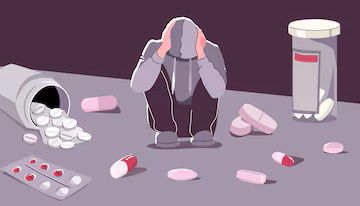
Pain takes many shapes, comes in many ways, and experienced in varying degrees. Acute and chronic. Referred and phantom. Physical and psychogenic. Spiritual and social. Mild and severe. Manageable and incapacitating. Pain knows no limits and has no rules.
Pain, though a “terrible instrument” (words of C.S. Lewis), is not all bad, however.
Of course, no one in his right mind wants to hurt. We are pain-avoiding, pleasure-seeking creatures. But pain is important. It is communication.
Among the reasons why Hansen’s disease is so dreadful is that it causes nerve damage and a loss of sensation, particularly in the extremities, which can lead to and/or exacerbate injuries. If I touch a hot stove, I immediately feel pain, signaling to me that something is amiss. I pull my hand away. Not so for someone suffering from leprosy.
In the mental health, addiction-recovery world, too little pain can be “hazardous,” just as too much pain can be “hazardous.” Finding the “sweet spot” can be hard to discern. Extreme pain—whether mental-emotional or physical—can be paralyzing (and deadly). It triggers fear and anger and can cause insomnia, inability to concentrate, lead to anti-social behaviors, and ultimately heighten the temptation to use (or worse, something fatal). Too little pain, however, can make us complacent and self-reliant, equally damaging.
So, what are the implications of this for both those struggling with addictions and those in helping professions? We should not be too quick to assuage suffering. Medication can be a knee-jerk reaction, especially in today’s culture. We have a pill for every disorder and dysfunction. Medication can be the relatively easy and efficient “solution.” But we might want to consider whether the pain (though inconvenient) could be an important component in the journey of recovery. What might it be saying? What insecurities or unmet needs might it be revealing? On the other hand, we should not suppose that it is more noble or beneficial to let suffering have its free course, as if progress in recovery is contingent on experiencing the full force of pain. Neither masochism nor sentimentalism is healthy.
Michael Emlet, MD, offers this helpful framework for thinking about medication from his book, Descriptions and Prescriptions: A Biblical Perspective on Psychiatric Diagnoses & Medications: “Medications are gifts of God’s grace, and medications can be used idolatrously.” For those struggling with depression and anxiety, psychoactive medications can be amazing gifts . . . stabilizing moods, enabling daily functionality, and minimizing risk of addictions and other maladaptive ways of being which, if taken as prescribed, should be received gratefully and humbly. On the other hand, these gifts can turn into idols . . . dependencies that divert our attention from the source of our pain with the effect of distancing us even further from the underlying problems causing the addictions. We must be mindful that treatment does not equal cure. Accordingly, we must be cautious against elevating the gift over the Giver.
Dr. Emlet continues by warning, “A person can have wrong motives for wanting to take medication and a person can have wrong motives for not wanting to take medication.” Medication in and of itself is not good or bad. What is paramount is the attitude of the person seeking help. If you are the person in crisis and more or less eager for whatever prescription(s) are recommended in your particular case, it might do well to ask yourself questions like: “Am I more interested in immediate comfort than exploring what might be at work in the subterranean of my soul? Am I too lazy to do hard things like exercising, watching my diet, engaging in spiritual disciplines, getting involved in an accountability group, etc.? Am I willing to repent of clearly harmful ways of living? Am I caving in to family and societal pressures? Do I trust God, or do have more faith in a vial of pharmaceuticals?”
On the flip side, resistance to medication(s) might be due to pride, self-sufficiency, the stigma attached to psychotropics, and fear—losing control, lowered energy state, dependency, disapproval from others, etc. Whether it is the egotistical notion, “I should be able to handle my troubles on my own” or a more twisted theological version of the same, “I should be able to overcome this with enough faith in the Lord,” there is no shame or lack of spirituality in taking prescription medications as directed. Consultation with one’s therapist and/or doctor along with a pastor/elder, a trusted family member and/or friend (along with prayer) makes for wisest decisions.
Psychoactive medications may change neurotransmission in the brain and lead to increased positive emotions. But let us not forget that improved moods do not necessarily correlate with healing and transformation. We must not mistake relief for redemption. Negative feelings can be managed while the heart (the moral-spiritual center) of an individual remains unchanged.
This is the dance in which we are involved at Life Challenge. To medicate or not? If so, What? How much? How long? We have a team of caring, competent professionals—medical, clinical, and pastoral—who endeavor to bring best possibilities to hurting and wounded people. As a ministry we meet broken people where they are and seek to take them—as much as they are willing and able—into deeper places of wellness and wholeness. At the end of the day, we believe that any real and lasting recovery is grounded and sustained by God’s salvation. It is in Christ alone that we find true freedom.
As a pastor, I have witnessed how pain is the main pathway to Christ. Carrot sticks and sugar blocks are generally not enough. It usually takes a lightning bolt and getting knocked off our feet to move us to Christ. Pain is the “megaphone” (compliments to Lewis again) that gets our attention. But more, pain can be the strange place where we encounter Christ in and through others who share in our burden. When others mourn with us. When companions come alongside and offer presence, entering the dark space with us, quietly listening and waiting for divine action.
Christ meets us in our brokenness and bankruptcy. He himself was a man of sorrows, a man who knew like no other, the pain of the physical, psychological, relational, and spiritual. Our consolation is not found in figuring everything out, fixing what is before us, alleviating all pain (as if sorrow is a mathematical problem with a solution). The poor in spirit are called “blessed” because theirs is the kingdom of heaven (Matthew 5:3). Pain and suffering become the “awe-ful” doorway to life with God.
Dr. Emlet reminds us, “Using medication in select situations may be analogous to calming the surface waters to allow for deep sea exploration. You can’t have a diving expedition if there is a gale on the surface of the water.” One of the problems today, however, is that there is little tolerance for any kind of pain, any kind of “rough water.” This lends to the overuse of prescription pain pills. Sometimes all people need is just someone lovingly beside them, persevering with them in the choppy waters of life. This is especially true in a world where we have never been more disconnected and alone.
As is often true, the more in suffering and pain a person is, the more the cry of the heart is solely for communion, friendship, presence. In St. Paul’s last letter, written from a cold, dingy prison while awaiting execution, he pleads with his beloved son and colleague in the faith, Timothy, “Do your best to get here before winter” (2 Timothy 4:21). Paul wanted his friend. He needed presence. He needed someone to sit with him in sorrow.
What ultimately consoles is not learning how to cope, managing our emotions, being delivered from trying circumstances, or beating some addiction but meeting Christ through others in the storm. As Professor Andy Root puts it, “Inside this shared sorrow, the sacrament of Jesus’ ministering presence (is) encountered.”

Thank you for the message and thoughtfulness that went into it. Great insight!
Kurt, sorry for the delayed response. Thank you for your kind words!
Once again, well written Pastor Jeff. I have been through the pain of addiction and through Christ I have come out the other side. Yes, the medical side did have its own course of action, but fact is, Once I truly accepted Christ did, I truly begin to heal.
Thanks Earl! Love ya!
Everyone needs a savior, and you don’t need a savior if you aren’t hurting. Medication is a tool, not a solution.
Important message, at an important crossroads of our ministry. Thanks Pastor Jeff.
That was very concise and helpful. Thanks.
Thanks Ruthie! Blessings to you and yours!
Blessings to all of L/C Pastors and employees who dedicating their Lives for helping the residents who come and go through the program ! This is DuanePliska and I am privileged to have Shared my Testimony there several times and returning on March 22nd. 2026! Residents please Never Give Up on Jesus and that Awesome Program! Love you all ! God Bless!❤️🙏🙏
I appreciate your words, Dad. Thank you for your thoughtfulness.
Hey, thanks son! Appreciate your heart for Jesus and others!